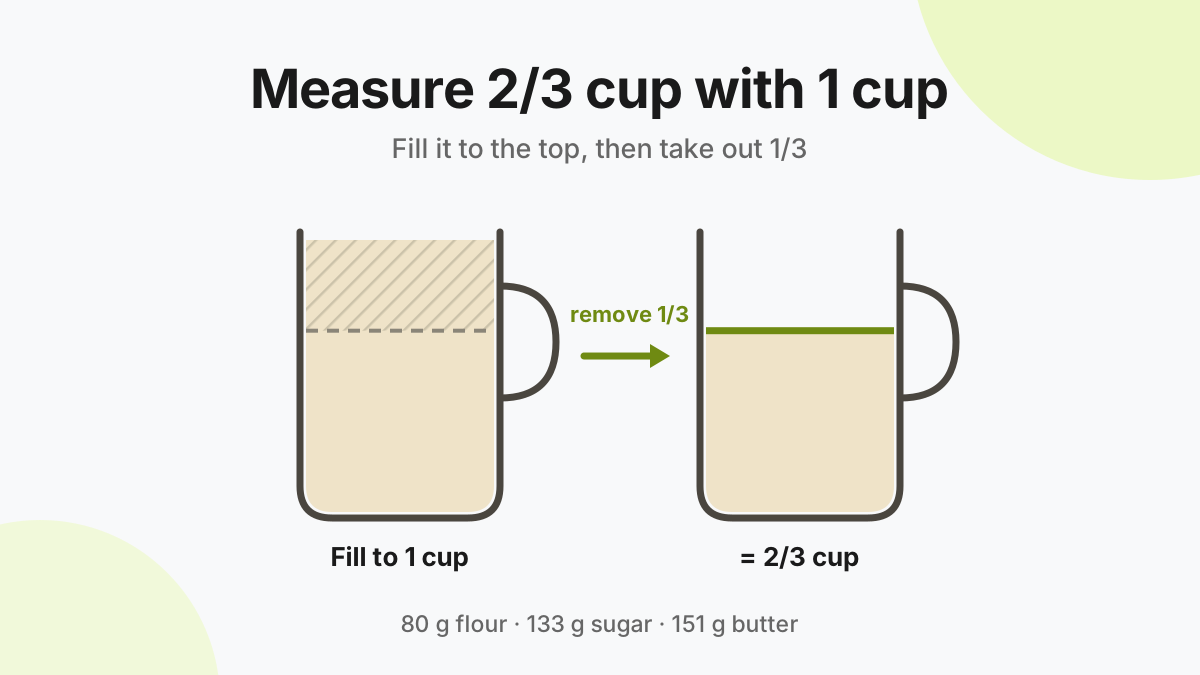
To measure 2/3 cup using a 1-cup measure, fill it to the top and remove 1/3 cup — what remains is exactly 2/3 cup. Or measure 10 tablespoons plus 2 teaspoons. Or weigh it: 2/3 cup flour is 80 g.
Almost every measuring-cup set skips 2/3. You get 1 cup, 1/2, 1/3 and 1/4, and then a recipe asks for two thirds and you are standing there doing fractions with sticky hands. The good news is that 2/3 is one of the easiest odd amounts to hit, because it is just 1 cup minus 1/3 — and both of those cups are already in your drawer.
This guide covers the trick itself, the tablespoon equivalents for every awkward fraction from 1/8 up to 7/8, and the exact gram weight of each amount for the three ingredients that matter most. If you would rather skip the arithmetic entirely, our grams-to-cups converter will do any of these in one step.
The fastest way to measure 2/3 cup
There are two tricks worth memorising, and between them they cover every kitchen situation.
Trick 1: fill 1 cup, take out 1/3
Fill your 1-cup measure and level it off. Now scoop out one full 1/3-cup measure and tip it back into the bag. Whatever is left in the 1-cup is exactly 2/3 cup, because 1 − 1/3 = 2/3. This is the fastest method by far when you already have both cups clean.
Trick 2: 10 tablespoons + 2 teaspoons
A US cup holds 16 tablespoons. Two thirds of 16 is 10 2/3, and that leftover 2/3 of a tablespoon is 2 teaspoons — so 2/3 cup is 10 tablespoons plus 2 teaspoons. Slower, but it works when your only 1/3-cup measure is buried in the dishwasher.
Three ways to measure 2/3 cup, least to most accurate
All three get you to 2/3 cup. They are not equally precise, and for baking that difference shows up in the finished crumb.
1. Subtract from a 1-cup measure (quickest, least precise)
Fill, level, remove 1/3. The weakness is that you are relying on two separate measurements being accurate, and any error in the 1/3-cup scoop transfers straight into what is left behind. With flour it is worse, because the flour you scoop out takes an unpredictable amount of settled, compacted powder with it. Fine for stews, soups and anything forgiving.
2. Build it from tablespoons (slower, more consistent)
Ten level tablespoons plus 2 teaspoons. Small spoons are easier to fill evenly than a big cup, and there is no scooping-out step to introduce error, so you usually land closer to the true amount. The catch is that eleven separate scoops give you eleven chances to lose count — line them up or tally as you go.
If your recipe is written in tablespoons already, skip the cup step and weigh grams straight into tablespoons — same densities as this page.
3. Weigh it (most accurate, and fastest once you own a scale)
Put your bowl on a digital scale, press tare, and add 80 g of flour. No cups, no levelling, no fractions, and nothing to wash up. This is the only method that is genuinely repeatable, because 80 g is 80 g whether you scooped, spooned or poured. A scale costs about the same as a decent baking tray and removes the entire problem this article is about.
Master chart: every odd cup amount
This is the table to bookmark. The last column is the one most charts leave out — how to hit each amount using only the four measures that come in a standard set.
| Cup amount | Tablespoons | Tbsp + tsp | Teaspoons | Fluid oz | Build it with standard cups |
|---|---|---|---|---|---|
| 1/8 cup | 2 | 2 tbsp | 6 | 1 | 2 tbsp |
| 1/4 cup | 4 | 4 tbsp | 12 | 2 | 1/4 cup |
| 1/3 cup | 5 1/3 | 5 tbsp + 1 tsp | 16 | 2 2/3 | 1/3 cup |
| 3/8 cup | 6 | 6 tbsp | 18 | 3 | 1/4 cup + 2 tbsp |
| 1/2 cup | 8 | 8 tbsp | 24 | 4 | 1/2 cup |
| 5/8 cup | 10 | 10 tbsp | 30 | 5 | 1/2 cup + 2 tbsp |
| 2/3 cup | 10 2/3 | 10 tbsp + 2 tsp | 32 | 5 1/3 | 1/3 cup twice, or 1 cup − 1/3 cup |
| 3/4 cup | 12 | 12 tbsp | 36 | 6 | 1/2 cup + 1/4 cup |
| 7/8 cup | 14 | 14 tbsp | 42 | 7 | 3/4 cup + 2 tbsp |
US customary measures. 1 cup = 16 tablespoons = 48 teaspoons = 8 fluid ounces. A metric or old UK cup holds more — see how the standards compare.
Two patterns make this easy to remember. Anything with an eighth in it is a whole number of tablespoons, because 1/8 cup is exactly 2 tbsp. Anything with a third in it lands on a fraction, which is why 1/3 and 2/3 need teaspoons to finish the job.
For anything under a quarter cup it is easier to work in spoons from the start — a dedicated grams-to-tablespoons chart covers 24 ingredients without the cup step in between.
Exact grams for flour, sugar and butter
Here is where volume measuring gets genuinely misleading. Two thirds of a cup is always the same amount of space, but the weight in that space changes completely depending on what you put in it. The figures below come from the same densities used across this site: all-purpose flour at 120 g per cup, granulated sugar at 200 g, and butter at 227 g.
All-purpose flour
| Cups | Grams | Oz |
|---|---|---|
| 1/8 | 15 g | 0.5 |
| 1/3 | 40 g | 1.4 |
| 1/2 | 60 g | 2.1 |
| 2/3 | 80 g | 2.8 |
| 3/4 | 90 g | 3.2 |
Based on 120 g per cup, spooned and levelled.
Granulated sugar
| Cups | Grams | Oz |
|---|---|---|
| 1/8 | 25 g | 0.9 |
| 1/3 | 67 g | 2.4 |
| 1/2 | 100 g | 3.5 |
| 2/3 | 133 g | 4.7 |
| 3/4 | 150 g | 5.3 |
Based on 200 g per cup. Sugar does not compact, so cups are reliable here.
Butter
| Cups | Grams | Oz |
|---|---|---|
| 1/8 | 28 g | 1.0 |
| 1/3 | 76 g | 2.7 |
| 1/2 | 113 g | 4.0 |
| 2/3 | 151 g | 5.3 |
| 3/4 | 170 g | 6.0 |
Based on 227 g per cup. 1/2 cup is one standard US stick.
Butter is the easy one: the wrapper is already printed with tablespoon marks, so 2/3 cup is 10 tbsp + 2 tsp cut straight off the stick, or 151 g on a scale. For flour, our flour converter handles any weight you need, and the full cups-to-grams chart covers the other ingredients.
Quick math answers
- How many 2/3 cups in 1 cup? One and a half. 1 ÷ 2/3 = 1.5, so a full 2/3 cup plus half of another fills a 1-cup measure.
- Is 2/3 cup the same as 3/4 cup? No, and do not swap them. 3/4 is bigger by 1 tbsp + 1 tsp — about 10 g of flour, or 17 g of sugar.
- What is 2/3 cup doubled? 1 1/3 cups, which is 21 tbsp + 1 tsp. Easiest as 1 cup plus 1/3 cup.
- What is half of 2/3 cup? 1/3 cup, or 5 tbsp + 1 tsp. Halving thirds is the one case that comes out clean.
- What is 2/3 cup tripled? Exactly 2 cups. Handy when scaling a recipe by three.
Common measuring mistakes
- Scooping flour straight from the bag. Dragging the cup through the bag compacts the flour. A scooped cup can weigh 140—150 g instead of 120 g — up to 25% extra, which is the single most common reason home baking comes out dry and dense. Spoon the flour into the cup instead, or weigh it.
- Using the wrong type of cup. Dry measures are made to be filled to the brim and levelled. Liquid measures have the top line below the rim so you can carry them without spilling. Fill a liquid jug to the top for a dry ingredient and you have overshot before you started.
- Over-packing. Tapping the cup on the counter to settle the contents, or pressing down to fit more in, both add weight without adding volume on the label. The exception is brown sugar, which most recipes expect to be firmly packed — check whether yours says packed or loose, because the difference is around 40 g per cup.
- Not levelling. A heaped 2/3 cup is not 2/3 cup. Sweep the back of a knife across the rim so the surface is flush. This matters most for the small amounts, where a heap is a bigger share of the total.
Bottom line
For 2/3 cup, fill a 1-cup measure and take out 1/3 — or count out 10 tablespoons plus 2 teaspoons if the 1/3-cup is dirty. Every other awkward fraction is in the master chart above, and the pattern worth remembering is that eighths are whole tablespoons while thirds always need teaspoons to finish.
But the honest answer is that all of this is a workaround for a problem weight does not have. Two thirds of a cup is 80 g of flour, 133 g of sugar and 151 g of butter — the same space holding almost twice the weight depending on what is in it. If a recipe matters to you, weigh it.
Skip the fractions entirely
Enter any weight and any ingredient and get the exact cups — with the correct density applied, not a one-size-fits-all guess.
Open the converterFrequently asked questions
Fill the 1-cup measure to the top, then remove 1/3 cup. What is left in the cup is exactly 2/3 cup, because 1 minus 1/3 equals 2/3. Level the surface before you remove anything so the starting amount is accurate.
Use tablespoons. Ten level tablespoons plus 2 teaspoons equal 2/3 cup, since a cup holds 16 tablespoons and 2/3 of 16 is 10 and 2/3. If you only have a teaspoon, 32 level teaspoons is the same amount.
One and a half. Dividing 1 by 2/3 gives 1.5, so you need one full 2/3 cup plus half of another to fill a 1-cup measure.
No. 3/4 cup is larger by 1 tablespoon plus 1 teaspoon. With flour at 120 grams per cup, 2/3 cup weighs 80 grams and 3/4 cup weighs 90 grams, a 10 gram difference.
One third of a cup. Half of 2/3 is 1/3, which is 5 tablespoons plus 1 teaspoon, or 16 teaspoons.
10 tablespoons plus 2 teaspoons, which is 10 and 2/3 tablespoons in total. A US cup holds 16 tablespoons.
80 grams. All-purpose flour weighs about 120 grams per cup, and two thirds of 120 is 80. Granulated sugar is heavier at 133 grams for the same 2/3 cup, and butter is 151 grams.
Weight is more accurate. A cup of flour can vary by 20 to 30 grams depending on how you fill it, while 80 grams on a scale is always 80 grams. Use volume for liquids and small amounts, and a scale for flour, sugar and anything where texture matters.