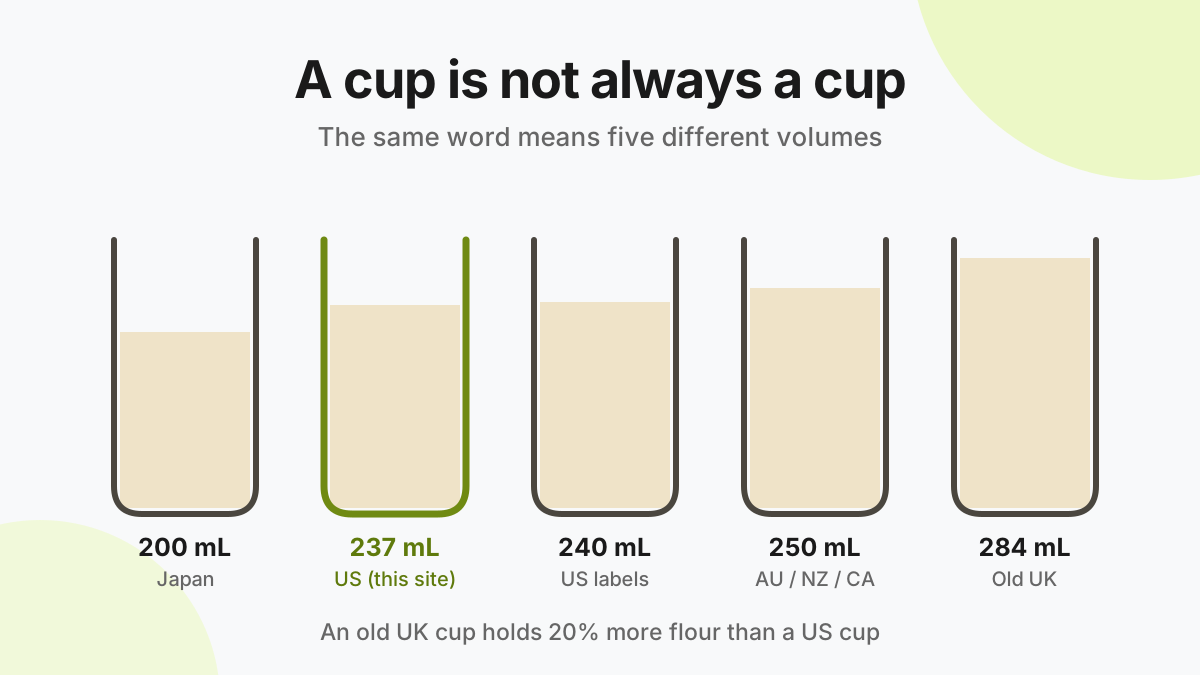
A US cup is 236.6 ml, a metric cup (Australia, New Zealand, Canada) is 250 ml, and an old UK cup is 284 ml. Using the wrong one changes a cup of flour by up to 24 g — about 20%.
Almost every conversion chart online quietly assumes you mean a US cup. Most of the time that is right, because most recipes written in cups are American. But if you are following an Australian blog with American measuring cups, or working from your grandmother's British cookbook, the word "cup" means something different — and nobody tells you.
This guide sets out what each standard actually holds, how much the difference costs you in grams, and how to work out which one a recipe means.
The five cup standards
There are more than you would expect, and they are not close together.
| Standard | Volume | Where you meet it | vs US cup |
|---|---|---|---|
| Japanese | 200 ml | Japanese recipes | −15.5% |
| US customary | 236.6 ml | US recipes, and this site | baseline |
| US “legal” | 240 ml | Nutrition labels, not recipes | +1.4% |
| Metric | 250 ml | Australia, New Zealand, modern Canada | +5.7% |
| UK imperial | 284.1 ml | Older British cookbooks | +20.1% |
A US cup is 8 US fluid ounces (8 × 29.5735 ml). The imperial cup is 10 imperial fluid ounces (10 × 28.4131 ml) — a different ounce as well as a different count, which is why the gap is so wide.
The one that catches people out is the UK imperial cup. It is not slightly bigger, it is a fifth bigger. The good news is that you will rarely meet it: modern British recipes are written in grams and millilitres, so the 284 ml cup mostly lives in older cookbooks.
How much does the wrong cup actually change?
Volume differences only matter once you turn them into ingredients. Here is one cup of flour, measured with each standard, using the 120 g per US cup figure this site uses throughout.
Twenty-four grams does not sound like much until you picture it: that is roughly two extra tablespoons of flour in a cake that only calls for one cup. It is the difference between a tender crumb and a dry one.
The effect scales with everything else in the recipe, too:
| Ingredient | US cup | Metric cup | Old UK cup |
|---|---|---|---|
| All-purpose flour | 120 g | 127 g (+7) | 144 g (+24) |
| Granulated sugar | 200 g | 211 g (+11) | 240 g (+40) |
| Butter | 227 g | 240 g (+13) | 273 g (+46) |
Note that the errors all push the same way. Use a metric cup on an American recipe and every single ingredient comes out about 5.7% heavy — the ratios stay roughly right, which is why the result is often edible but slightly dense. Use a UK cup and you are 20% over on everything.
Which cup does this site use?
Every figure on this site is based on the US customary cup of 236.6 ml. That is why one cup of water is listed as 237 g: water weighs almost exactly 1 gram per millilitre, so the gram figure and the millilitre figure are nearly the same number.
If you are measuring with a 250 ml metric cup, add roughly 5.7% to any gram figure here — or better, ignore the cup and use the gram value directly. All the underlying numbers are published on our ingredient density page if you want to check them or run your own conversions.
How to tell which cup a recipe means
Recipes almost never say. These clues are reliable:
- American site or cookbook? US customary, 236.6 ml. This covers the large majority of cup-based recipes online.
- Australian or New Zealand? Metric, 250 ml. Also watch the tablespoons — see below.
- Canadian? Modern recipes use the 250 ml metric cup; older ones may use the imperial cup.
- British and written in cups at all? Check the date. Recent UK recipes use grams; a genuinely old one may mean 284 ml.
- Recipe lists grams alongside cups? Use the grams and stop worrying. That is the author telling you exactly what they meant.
One more shortcut: if a recipe says 1 cup = 240 ml anywhere, it is American. That rounded 240 figure comes from US nutrition labelling.
Converting between cup standards
If you have the wrong measuring cups for the recipe in front of you, you do not need new equipment — just a multiplier.
| Recipe calls for | Measured in US cups | Quick rule |
|---|---|---|
| 1 metric cup (250 ml) | 1.06 US cups | add a rounded tablespoon |
| 1 old UK cup (284 ml) | 1.20 US cups | 1 US cup + 3 tbsp |
| 1 Japanese cup (200 ml) | 0.85 US cups | a generous 3/4 cup |
| 1 US cup (236.6 ml) | — | 0.95 metric cups |
So an Australian recipe asking for 2 cups of flour wants about 2.11 US cups, or 254 g. Measured with US cups and no adjustment you would be 14 g short — not a disaster, but enough to notice in a loaf.
The quick rules in the last column are close enough for cooking. For baking, where a few grams shift the texture, use the gram figure instead.
Those rules lean on odd fractions like 1 cup plus 3 tablespoons. If you are not sure how to hit an amount like that with a standard set of measuring cups, our guide to measuring 2/3 cup and other awkward fractions has the full chart.
The tablespoon trap
Cups are not the only unit that shifts. An Australian tablespoon is 20 ml — four teaspoons, where the US and UK tablespoon is 15 ml, or three.
That is 33% larger, and it hurts more than the cup difference because tablespoons are used for the potent ingredients. Four teaspoons of baking powder where the recipe wanted three is a real problem; three extra grams of flour is not.
If a recipe is Australian and calls for tablespoons of anything leavening, salty or spicy, measure it as 3 teaspoons rather than reaching for a tablespoon.
The fix takes ten seconds
All of this disappears the moment you weigh. A gram is a gram in every country, in every decade, regardless of whose cookbook you are holding. There is no American gram.
If your recipe is in cups and you would rather work in grams, our grams-to-cups converter handles any ingredient in one step, and the cups-to-grams chart goes the other way. For the ingredient that causes the most trouble, the flour converter is worth bookmarking.
Stop guessing which cup they meant
Enter grams, pick your ingredient, get the cups — all on the US standard, with the density applied properly.
Open the converterFrequently asked questions
It depends on the country. A US customary cup is 236.6 ml, the US nutrition-label cup is 240 ml, a metric cup used in Australia, New Zealand and Canada is 250 ml, and an old UK imperial cup is 284 ml. A Japanese cup is 200 ml.
No. An Australian cup is 250 ml and a US cup is 236.6 ml, so the Australian cup is about 5.7 percent larger. For flour that is 127 grams instead of 120 grams per cup.
With flour at 120 grams per US cup, a metric cup gives you about 127 grams and an old UK cup about 144 grams. That UK cup is 24 grams more, roughly 20 percent extra, which is enough to make a cake dry.
Every conversion on this site uses the US customary cup of 236.6 ml. That is why one cup of water is listed as 237 grams, because water weighs almost exactly 1 gram per millilitre.
Rarely. Modern British recipes are usually written in grams and millilitres rather than cups. The 284 ml imperial cup mainly turns up in older cookbooks, so check the publication date before assuming.
The 240 ml cup is a rounded figure used for nutrition labelling, not for recipes. The difference from the 236.6 ml customary cup is about 1.4 percent, which is too small to matter in cooking.
No. An Australian tablespoon is 20 ml, or 4 teaspoons, while the US and UK tablespoon is 15 ml, or 3 teaspoons. The Australian spoon is 33 percent larger, which matters for baking powder and other small quantities.
Weigh your ingredients. A gram is a gram in every country, so weight removes the ambiguity completely. It is also faster and means fewer cups to wash.